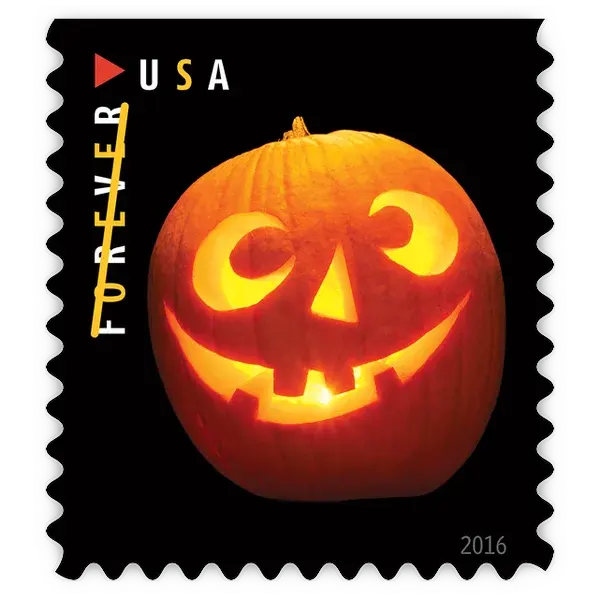
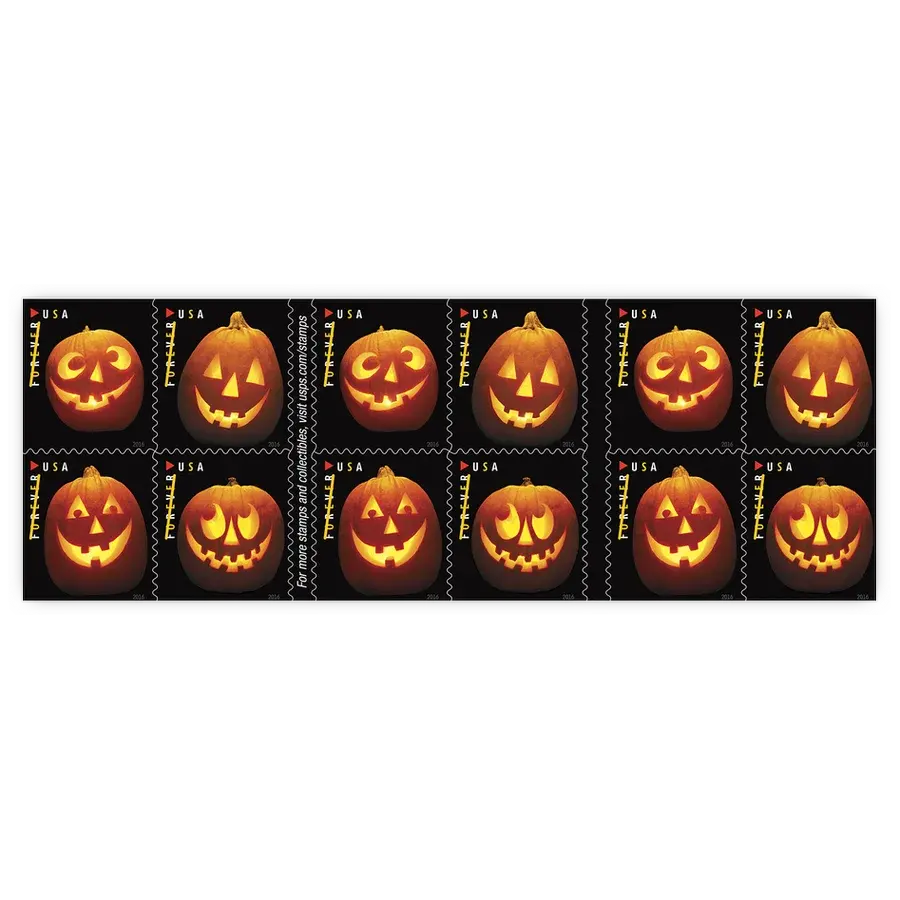
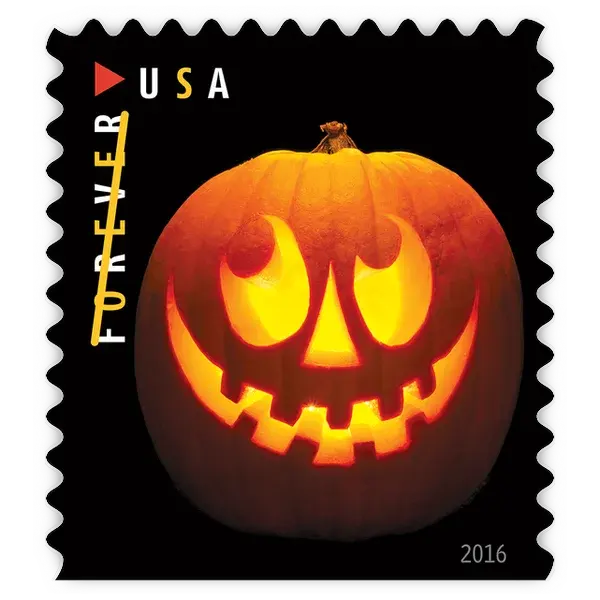
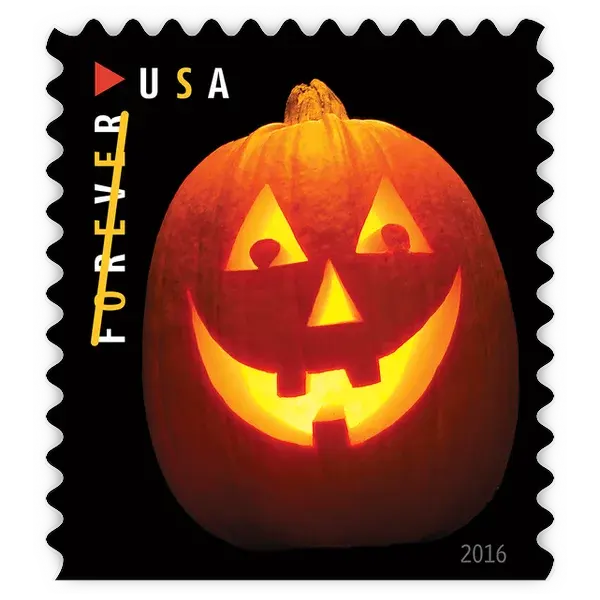
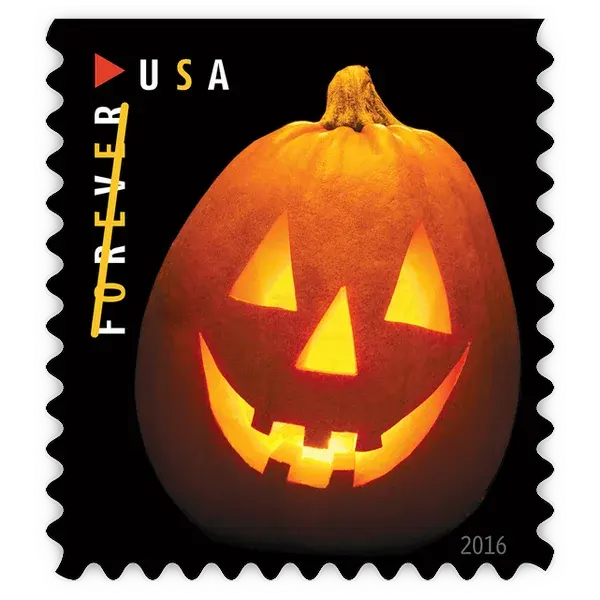
Jack-O'-Lanterns Forever Stamp 2016
Happy Halloween!
Let's delve into the fascinating history behind Halloween.
Origins of Halloween: Samhain
Samhain, an ancient Gaelic festival meaning ??summer??s end,?? is one of the earliest predecessors of Halloween. Documented as far back as the 10th century, Samhain traditions included hollowing out turnips and carving faces into them, akin to today??s jack-o??-lanterns.
Samhain marked the preparation for winter, spanning from sunset on October 31st to sunset on November 1st. The festival involved lighting massive bonfires for purification, harvesting crops, and moving livestock to winter pastures, helping communities brace for the upcoming cold months.
The Otherworldly Connection
During Samhain, it was believed that the veil between the living and the otherworld was at its thinnest, allowing fairies, spirits, and the souls of the dead to cross over. While some spirits were benevolent, others were malevolent and required warding off. People disguised themselves as spirits to avoid harm, often going door-to-door singing or reciting verses in exchange for food. Originally observed in Ireland, Scotland, and the Isle of Man, these practices eventually spread to other parts of the world.
Christian Influences
Christian traditions significantly shaped Halloween. November 1st is All Saints?? Day, and November 2nd is All Souls?? Day. The evening before these holy days, October 31st, became known as All Hallows?? Eve. The term ??Allhallowtide?? first appeared in 1471, referring to the three-day period honoring the dead.
Many believed that the boundary between the living and the dead thinned during this period, prompting disguises to avoid recognition by wandering souls??possibly the origin of Halloween costumes. In Poland, people prayed aloud at night to comfort the souls of the dead, and jack-o??-lanterns were thought to represent souls trapped in purgatory.
Allhallowtide Traditions
All Saints?? Day honors all deceased saints and martyrs, while All Souls?? Day commemorates all Christians who have died. Traditions vary by country, including preparing food offerings for souls, placing flowers or wreaths on graves, and lighting candles in cemeteries. Allhallowtide not only remembers the dead but also celebrates their lives.
Halloween in North America
Halloween arrived in North America in the 19th century, largely due to Irish and Scottish immigrants. By the early 20th century, it had become a major holiday celebrated nationwide.
The Legend of Jack-o??-Lanterns
The name ??jack-o??-lantern?? comes from an old Irish folktale. Stingy Jack was a notorious trickster who managed to trap Satan twice??first by turning him into a coin, and then by tricking him up an apple tree. In both instances, Jack extracted promises from Satan. When Jack died, he was denied entry to both heaven and hell. Satan, honoring his promise, gave Jack an ember from hell, which Jack placed in a hollow turnip to light his way. Jack became known as ??Jack of the lantern,?? and to ward off his ghost, the Irish carved eerie faces into turnips each Halloween.
Conclusion
Halloween, with its rich history from Samhain to Allhallowtide and immigrant traditions, is a celebration steeped in ancient customs and fascinating folklore. From bonfires and disguises to jack-o??-lanterns, it is a holiday that continues to captivate with its blend of history and myth.