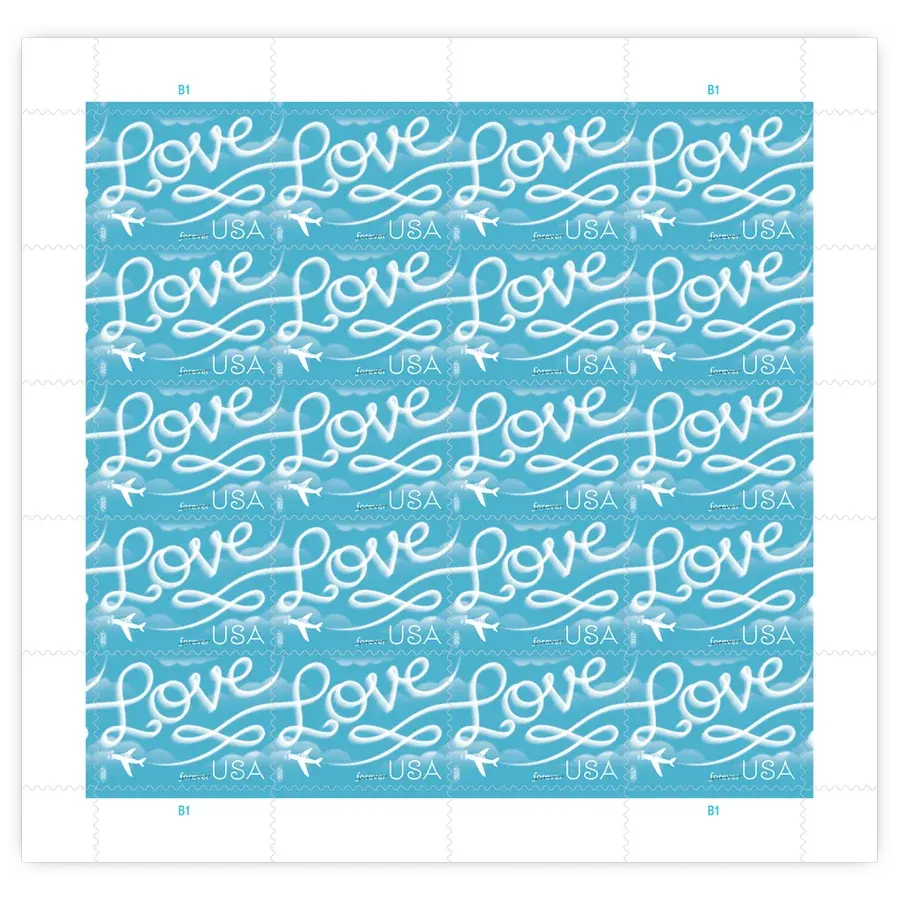
Why the stamp was issued: To celebrate the rare and enchanting art of skywriting.
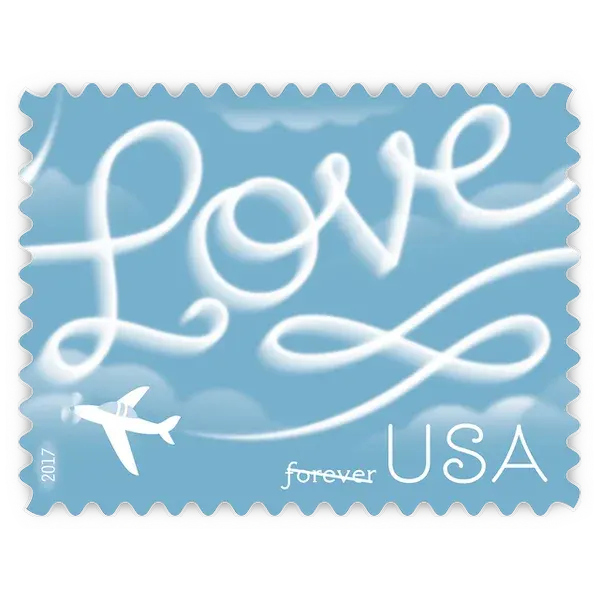
About the stamp design: Features an illustration of an airplane releasing a trail of white smoke forming words against a vivid blue sky.
Special design details: The smoke trail captures the delicate and artistic essence of skywriting, with wispy edges and graceful curves that evoke the ephemeral beauty of this craft.
First Day City: The First Day of Issue Ceremony was held in a location known for aviation history, symbolizing the connection between skywriting and flight innovation.
History the stamp represents: Skywriting has amazed people with its artistry and innovation since the early 1900s. Initially developed by British Royal Air Force pilots as a means of communication when other methods failed, it quickly evolved into a creative advertising tool for companies like Pepsi. In more recent times, skywriting has been used for personal messages, such as romantic gestures and proposals.
There are two distinct types of skywriting: traditional and skytyping. Both methods involve feeding paraffin oil through the plane??s exhaust to produce trails of white smoke. In traditional skywriting, a skilled pilot operates a cockpit switch to control the smoke release, crafting letters in reverse through precise maneuvers. This meticulous process requires careful planning and timing to ensure the message is legible from the ground.
Skytyping, on the other hand, employs a computer to control the release of smoke in bursts. Multiple planes fly in parallel lines, forming letters through a series of dots rather than continuous lines. While faster and more efficient, skytyping lacks the elegance of traditional skywriting.
Regardless of the method, skywriting remains a captivating spectacle. From advertisements to heartfelt personal messages, it continues to bring wonder and delight to onlookers, turning the sky into a canvas of inspiration and awe.